Employment · Fairness · Jury attitudes · Litigation · Opening Statements · Trial practice
Facts, Not Attacks

Attacking the opposing party may feel satisfying, but it rarely moves jurors. Facts — presented clearly and compellingly — do.
Because Juries Decide Cases, we take a story approach to your case. As social psychologists, we understand that juries decide cases based on stories. Our goal is to examine what jurors believe and help develop the most credible and compelling story based on those beliefs and the facts of the case. Your case is unique and we listen to jurors and examine the data to craft the story for your case.
Why Stories?
Jurors carry them
Jurors want them
If you don't give one, jurors will create one
Litigation Stories
Use jury research to know what stories jurors carry with them and what stories jurors will accept
Build the story of your case through focus groups.
Test the story through a mock trial.
Support that story through witness testimony.
Remove jurors who are opposed to your story (or who are more likely to prefer the opposing story)
Implement the story with the opening statement.
Story Dos
Clear and concise
Credible based on what jurors believe about how the world works
Consistent with the evidence and supported by the facts
Confirmatory stories that are affirmative and positive and not responsive/defensive
Story Don'ts
Complex and in the weeds
Confusing
Contrary to what jurors believe about how the world works
Responsive/defensive
Juror sensitivity to psychological harm has grown in recent years. In the trial consulting field, we have seen an increase in jurors' attention to the psychological harms suffered by plaintiffs. Plaintiff attorneys have given greater attention to non-economic damages, particularly when there are barriers to significant punitive damages.
Jurors now reference such harms as PTSD and trauma with increasing frequency, related to a broader range of experiences and for far less significant harms than in the past. This phenomenon of broadening and deepening definitions of such terms is referred to as "concept creep." The psychologist and author Nick Haslam, who coined the term, notes a number of ways in which the concept of trauma, for example, has expanded over time, now including psychological trauma, indirect trauma (trauma from an experience that happened to someone else), and cultural trauma in the definition of the term. Haslam suggests this concept creep has resulted in normalization of trauma and risks a growing sense of victimhood.
A 2001 research study found that about 90% of Americans qualified as having experienced trauma under the diagnostic definition, and public conceptions tend to expand even further than clinical ones. Additionally, there has been an increase in rates of a variety of mental health issues in the past decade. These increases, combined with expanding mental health awareness efforts, make psychological harm much more visible and salient to jurors.
In the litigation context, a growing sense of victimhood and awareness of psychological harm certainly risks increased non-economic damages as jurors grow more apt to characterize a plaintiff's negative experience(s) as trauma.
Egg Shell
Furthermore, we hear jurors increasingly speak of these harms as subjective, noting that some people are more sensitive than others. Some jurors are willing to criticize a plaintiff for exaggerating their harm. More typically, however, when these points about plaintiff sensitivity are raised in mock jury deliberations, they are raised to support a plaintiff's claim of harm. Jurors treat more sensitive plaintiffs as egg shell, raising — not lowering — their damages. Prior experiences with trauma and harm are also turned around on the defense because they make new trauma "triggering" causes, not alternative causes.
In fact, non-economic damages account for the lion's share of nuclear verdicts. In Nuclear Verdict: Trends, Causes, and Solutions it is revealed that nuclear verdicts are not driven by punitive damages. Rather, as they report, "the total amount of noneconomic damages awarded in nuclear verdicts exceeded the total amount in punitive damages. In six of those 10 years, the total amount of noneconomic damages awarded exceeded the total amount of economic damages and punitive damages combined."
Treatment
Claims of psychological harm are not always backed up with treatment. While some jurors fault plaintiffs for this, the greater reality is that most jurors do not. Jurors often excuse failure to seek psychological treatment by referencing barriers to therapy, including cultural and financial barriers. Lack of treatment does not necessarily equate to lack of harm.
However, when a plaintiff experienced a trauma, whether under the old or expanded definition of the term, the defense needs to address this. First, the defense needs to recognize harm. This is typically the first thing that the defense can and should say in opening statement. It not only humanizes the defense, but it builds credibility with the jurors who have just heard plaintiff's narrative and are likely feeling at least somewhat sympathetic to the plaintiff's plight.
Another consideration is to use therapy cost as a potential counter-anchor on damages. How much does psychological counseling cost for someone's lifetime? Acknowledging that a plaintiff may need therapy, and reminding jurors of the cost of this, can present an alternative to the multi-millions that the plaintiff seeks for their emotional distress damages.
"If a picture is worth a thousand words, then a video is worth a million."
"Seeing is believing."
Folk wisdom would (and perhaps does) have many of us thinking that a video alone can speak for itself. After all, isn't a video unambiguous documentation of exactly what happened in a situation?
Not at all. Before you play the body-worn camera footage, the security tape, or the social media video in court, it's important to understand that no matter how clearly you think a video shows what happened, there are a variety of factors that influence how a juror will interpret video evidence.
When video is played in court, the events that occurred are inherently recontextualized. The situation captured and depicted in the video happened in a different time, place, and social context than when it is viewed in the courtroom, and there are a variety of transformations it undergoes to get there, both intentional and unintentional. There are visual, auditory, and/or textual transformations through the recording, editing, and viewing processes. What makes it into the frame? How much, if anything, can you hear? Whether watching a video with the sound muted or viewing a social media post without a caption, the same video can tell a different story with such modifications.
Depending on how much time has elapsed between the creation of the video and the trial, there may also be changes in social norms, expectations, and attitudes that alter perceptions of the situation. If the video was taken five years prior to trial, what was an accepted norm at the time may seem outdated or even inappropriate when viewed at a later date.
Perhaps most importantly, videos at trial are verbally and nonverbally framed to achieve a desired effect — persuading the jury. A video, when presented at trial, is shown to the jury as part of a narrative or argument aimed at convincing them to accept a particular interpretation of the events in question. Thus, the video as presented is not neutral evidence, and jurors' interpretations are susceptible to influence by the video's framing.
Linguist Deborah Tannen and Psychologist Cynthia Wallat have defined frames as a social definition of what is happening in an interaction. Frames are signaled with verbal and non-verbal cues, and they help us to determine the meaning of ambiguous behaviors. When two people have different frames for what is going on in a situation, it can lead to a breakdown in communication. Many types of behavior, not just language, can be interpreted differently depending on the frame.
Coming back to video evidence, the behaviors on display in a video are often ambiguous, and jurors have to figure out how to interpret that behavior based on the frame provided to them in addition to their own existing attitudes and beliefs. Research shows that jurors' interpretations can actually be biased via verbal framing — how the video is presented. Recent research by Park, Feigenson, and Cheng (2025) even shows that partisan verbal framing of body-worn camera footage in opening statements increases judgements of a defendant's responsibility in a case.
This all goes to show that when it comes to trial, video evidence is not unambiguous and how you present it to your jury matters. Don't just press play. Instead, consider the following tips for presenting and framing video evidence:
1. Provide context first — set the scene for what jurors are about to see before you press play. Think who, what, where, and when. That way they'll spend less time trying to orient themselves and be able to focus on what matters.
2. Direct jurors' attention — tell jurors what you want them to pay attention to in the video, especially if there are multiple things going on or the video is lengthy. This can help jurors notice the most relevant details and remember what they saw better.
3. Connect the video with your case story — when a video is being used to flesh out your case story or bring it to life, it can be helpful to explicitly frame the video in that way. Tell the jurors they will see a video that supports a point in your affirmative case story, then briefly reiterate that point when you play it.
4. Acknowledge recontextualization where helpful — if something has changed since the video was taken that could impact how a behavior or statement is interpreted, sometimes it is beneficial to point that out so jurors can put themselves in a different mindset.
5. Consider the details — jurors will often notice the little things, like time stamps, video edits or cuts, and things going in and out of the frame. Do what you can to reduce distracting details wherever possible, such as minimizing background noise and selecting any cuts carefully.
6. Use subtitles when appropriate — especially if the verbal content of a video is important, include subtitles in the video to improve comprehension and recall.
While framing can be a tool for more effectively utilizing video evidence, it is also important to recognize that jurors still bring attitudes, beliefs, and experiences to the table that can clash with a frame. The following may be signs that you're venturing into risky territory:
1. Taking on an additional burden — framing videos is generally most helpful in supporting the affirmative case story you're already developing. When your framing takes on an additional burden not already part of the fabric of your case, there may be greater risk of rejection from jurors.
2. Relying on a highly subjective interpretation — jurors are more resistant to framing of videos based on subjective characterizations about intent, personality, or emotional state.
3. Attacking a plaintiff — jurors are very sensitive to any perceived attacks on the plaintiff by the defense. It's best to avoid framing any video of a plaintiff as a criticism or condemnation of their personality or state of mind.
4. Portraying performative content as truth — jurors generally accept that videos posted on social media are selective and do not tell the whole story. It is risky to frame social media videos as definitive or holistic.
Taylor Trial Consulting sees hundreds of mock jury deliberations. The primary focus is to listen to the deliberations and understand the key issues and arguments to strategize on cases for trial.
Last month as a summer research associate, I examined these deliberations for another purpose — to understand how jurors select their forepersons and the impact of that foreperson on other jurors.
Methodology
Over 40 mock jury deliberations were reviewed, and data was tracked on every juror and foreperson — looking at race, gender, age, occupation, and more. Next, these factors were examined to determine whether and how these demographics influenced who took on the foreperson role and how persuasive they were during deliberations.
Importantly, these were all civil cases but took place throughout the country and on a variety of case types.
Who is Selected?
Mock juries were always allowed to decide who to have as their foreperson. There were two ways that forepersons were selected in the mock trials: group-selected (53%), meaning the foreperson was chosen by other jury members, or self-selected (47%), meaning the foreperson volunteered themselves for the role.
Gender
Males were selected as forepersons almost twice as often as females. Perhaps even more interesting was that when group-selected, the group was three times more likely to pick a male than a female. This was statistically significant. On the other hand, while female forepersons self-selected 10% more often than male forepersons, this was not a statistically significant finding.
Age
There was no significant relationship between age and selection of a juror as foreperson.
Race
White and non-white foreperson selection was analyzed. White jurors made up 56% of the forepersons while non-white jurors were forepersons 44% of the time. The racial make-up of the jury played a role in whether and when a non-white juror was selected as foreperson, but not when a white juror was selected as foreperson.
Occupation
In jury selection, in addition to considering which way a juror is likely to "lean" during trial, a prospective juror's likely leadership is considered. The forepersons had a variety of occupations, but there were two types of positions that emerged as more common: 26% had "manager" in their job title and 15% worked in the education field.
Does the Foreperson Influence Final Verdicts?
Yes, forepersons influence verdicts. Typically, about 10% of the jury shifted their verdict toward the foreperson's point-of-view from the beginning to the end of deliberations. On average, 75% of jurors ended up agreeing with the foreperson's position by the end.
Gender
Male forepersons had a statistically significant stronger impact than female forepersons. When a man was a foreperson, jury support for their side increased by 14% on average. When a woman was a foreperson, the increase was only 4%.
Age
There was no significant correlation between the level of influence and the foreperson's age.
Race
There was no significant difference in the level of influence by the race of the foreperson.
Now What?
TTC will continue to identify patterns in foreperson selection and influence across future cases. We're focused on understanding how group dynamics shape outcomes. Knowing who jurors follow — and why — helps TTC craft strategies that resonate with real people in the room, not just on paper.
An important issue that often comes up in preparing witnesses to testify about their professional actions or expert opinions is figuring out how to make their testimony clear and accessible to jurors who do not share their knowledge, experience, and expertise. Technical jargon or excessive detail can quickly muddy the waters of an argument or opinion and cause jurors to tune out and miss key information. That's not all though — on a more interpersonal level, certain language choices can distance jurors by making them feel dominated or excluded. When that happens, the jurors will be less likely to voice their opinions and argue for your side in the deliberation room.
When a witness is testifying in an expert or professional capacity, there is a difficult balance to strike between establishing authority and credibility and presenting as personable and human to the jury. For an expert or professional, it is often natural and tempting to try and show the jury how authoritative and credible they are by presenting their opinion in great detail, using all the correct terminology, and rejecting attempts at generalization. This is problematic, however, for two reasons: it's confusing and it's distancing.
The Problem of Confusion
The problem of confusion is easy to identify — jurors are not experts or professionals in the witness's field and therefore are not going to understand or pay attention to long-winded or complex explanations full of words they don't know. Instead of coming off as impressive or convincing, these complexities muffle the plot of the story and bury the lede on the key information jurors need to make their decision.
While it's easy to identify the problem of confusion, it can be difficult to address it in practice. Experts can have a hard time working past their own knowledge. They have what anthropologists call "professional vision," or a learned and highly specific way of viewing and interacting with the world through the lens of their professional training. It's not as simple as telling an expert to break things down or explain concepts using everyday terms. It's also about getting experts to identify what information is most important and impactful for jurors to understand and foregrounding that information simply and clearly. The key is to give jurors just the relevant information they need to understand and articulate your story in the case.
The Problem of Distance
The problem of distancing jurors is perhaps less obvious when it comes to witness testimony but is equally important to consider. While involved jurors will feel a responsibility to pay attention, to make informed decisions, and to speak up in deliberations, distant jurors will be more likely to sit back and let things slide, even if they agree with your arguments. Trials are a group activity, and anyone who has ever been excluded from a group probably knows that it does not usually motivate you to advocate for or help that group.
Specific forms of language, such as jargon, are used in communication to signal how a speaker views themself and to define the kind of relationship they have with other people or groups. A doctor who walks into a room of other doctors and uses terms like "differential diagnosis" is identifying themselves as a part of that group and creating solidarity with them by using a shared vocabulary that everyone in the group understands. In contrast, a doctor who walks into a patient's room in the ER and starts discussing the results of their "differential diagnosis" is creating a very different kind of relationship — one that creates distance by making clear that there is a mismatch in knowledge and understanding.
In the courtroom, you want your witnesses to help jurors feel like a part of your group. This means they need to cultivate a sense of solidarity, not distance. A witness can unintentionally define the relationship between themselves and the jurors as mismatched if their testimony is too technical or in the weeds. Instead, witnesses should work to create solidarity with jurors by approaching their testimony as a joint operation — giving jurors the information they need, no more and no less, in a way that they can understand and articulate in their deliberations.
Notably, these issues of confusion and distance are not exclusive to experts or other witnesses — attorneys themselves have their own professional vision and can face these same problems at trial. Being able to see a case through a juror lens (in addition to a lawyer's lens) and create solidarity with jurors through language are useful skills for attorneys to cultivate as well.
Witnesses can experience many emotions when they have to testify, whether at deposition or trial. These include anxiety about the process and the questioning; shame about the events at issue in the case and the fact that they have to testify at all; anger at the opposing attorney and the opposing party; fear of cross-examination, the judge or the jury; and relief when they're finally done.
These emotions can impact both the substance and the delivery of their testimony. For example, anxiety can affect working memory and impact a witness' ability to recall details of their story. It can also lead to a hyperfocus on specific details, often negative ones. In addition, anxiety impacts a witness' tone of voice, facial expressions, and body language. It can cause their voice to become higher pitched and breathy, leading to fidgeting and reduced eye contact. All of this impacts a witness' credibility.
During witness prep, we help witnesses manage their emotions so they can put their best foot forward at deposition or trial. Here are three keys to managing emotions.
1. Believe it's possible.
If a witness believes their emotions are uncontrollable and overwhelming, they will be. But if they believe they can change their emotions, that power is within their reach. When preparing witnesses, share stories of other witnesses who have found ways to manage their emotions during difficult questioning. Help them collect evidence that it's possible by looking at other times when they've worked with their emotions effectively.
I also like to tell witnesses that emotions are like an itch. You can't control the itch, but you can control the scratch. And often, the less you scratch, the less you itch. When witnesses consider opposing counsel an itch and see their job as refusing to scratch, they often recognize that they've done this before and believe they can do it again.
2. Use distanced self-talk.
Distanced self-talk sounds a little weird, but it's very effective. It's the practice of talking to yourself in the second or third person, and research shows it's effective in reducing the impact of anxiety. It can also be a helpful tool in prepping witnesses.
If witnesses are comfortable enough to talk to themselves before a deposition or trial testimony, they can say things like, "Susan's feeling a little nervous right now, but she's felt this way before. She's ready for this testimony and the opportunity to tell her story." For witnesses who find this silly or weird, it helps to hear that people like LeBron James, Bo Jackson, Pele, and Salvador Dali have successfully used this technique.
Some witnesses cannot go that far but are comfortable using the pronoun "you," which may also be helpful. "You're ready for this. You're prepared; this is your opportunity to answer questions and tell your story." That alone can create enough distance to reduce anxiety.
A mantra is another way witnesses can use self-talk to manage emotions. We often talk to witnesses about having a mantra such as "I am well prepared. I am confident. I am clear." We tell witnesses to think of their mantra as a rock they can touch in the swirling sea of drama around them.
3. Breathe and use the body.
Every witness can benefit from tapping into the breath. Research shows that slow breathing can reduce psychological stress when done correctly. Do not encourage anxious witnesses to take deep breaths, as this can worsen things. Inhalations can activate the parasympathetic nervous system, leading to more anxiety, but deep exhales do the opposite. Teaching witnesses breathing techniques and the evidence behind them has a twofold effect. First, it may decrease anxiety, and second, it may help the witness believe that they have power over the anxiety.
Another tool we've used with witnesses is finger holds. These are based on the ancient Japanese art of Jin Shin Jyutsu, which involved holding different body parts for different emotional responses. To use this tool, a witness can hold their thumb or finger with their other hand under the table or desk for a few minutes. Similar holds have been shown to reduce anxiety and pain in post-neurosurgery patients. These holds can be helpful to calm a witness' anxiety before stepping into the deposition or taking the stand for cross-examination.
Attorneys spend years working with witnesses and preparing them to tell their stories and share the evidence that will support those stories. But if the witnesses don't have the tools to manage their emotions while sharing that story and the evidence, all that preparation is lost.
Most law schools don't teach the art of taking or defending a deposition. Many attorneys learn by trial and error — watching more senior colleagues, then trying to replicate what works. Too often, the deposition is treated as a stepping stone to trial, or something witnesses have to "get through" along the way. However, once the deposition is taken, the testimony is largely set, the impression made. Cases can rise or fall on deposition testimony.
Plaintiffs' attorneys know this. They are taking steps to learn and prepare for depositions because they are treating depositions as trial itself. They study, prepare, and share strategies through books, podcasts, and seminars — arming one another with tools to maximize verdicts and settlements. One such resource is plaintiff's attorney Sach Oliver's 2024 book, Depositions Are Trial. It's quickly become a touchstone for plaintiffs' lawyers nationwide. Oliver has built courses and webinars around its strategies (which defense attorneys cannot access). To counter effectively, defense teams need to know what they're up against. We read the book, and here are the five most important takeaways.
1 — Depositions really are trial.
In the forward to the book, John F Romano, former president of the Academy of Florida Trial Lawyers, writes, "Each witness in a deposition is testifying in trial. Every question and answer in a deposition is for the jurors. Every ounce of deposition preparation is trial prep!" Dino Columbo, founder of Columbo Law, writes, "I truly believe more money is made in a conference room than in a courtroom." These plaintiff's attorneys know that cases are won and lost based on whether a jury believes and likes the witnesses. Deposition is the greatest impeachment tool available to an attorney. They want defense witnesses to look bad in deposition. They want the soundbyte, the awkward pause, the aggressive response, the guilty look.
Depositions also set the tone for settlement negotiations. In many jurisdictions, very few cases actually proceed to trial. It's nuclear settlements that are more common, and that means that depositions really are trial. Depositions are often the only opportunity a witness has to tell their story and the only opportunity for the other side to see how credibly and clearly they do so. A good deposition can mean the difference between a reasonable and a nuclear settlement.
Lesson: Defense attorneys also need to see the deposition like trial.
2 — Prepare for deposition like you're preparing for trial.
In the book, Oliver describes his process for preparing for deposition. He does focus groups before he ever writes a deposition outline, so that he can get an early feel for how the community sees the case and what work remains. They do mock trials before taking depositions, and let the mock jurors question (mock) witnesses to guide their questioning at trial. They have a theme for the case before they take their first deposition. They set goals for each deposition and ensure they achieve those goals.
Lesson: Defense witnesses need to be prepared for their depositions.
3 — Choose every word carefully.
Oliver will purposefully keep his deposition questions fewer than ten words, and end his questions with the word he wants to hear from the witness. For example, he will often turn statements into questions by adding "true?" at the end. "Physicians are responsible for keeping their patients safe during surgery, true?" Another way that Oliver is intentional with words is by weaving jury instructions into the questioning of a witness at deposition. He knows there are key words that jurors will lock in on, like common sense, common knowledge, consciously disregard, and foreseeable causes.
Lesson: Defense attorneys should prepare witnesses for these words.
4 — Don't let them tame your witnesses.
Oliver wants to tame your witnesses. You can't let him. In chapter 6, Oliver compares taking a deposition to training a horse and says you have to make it clear to the horse and the witness that you will never give up. "If you're not going to tell the truth, I'm going to make you work. There are techniques I'm going to use to make things difficult. And I will never give up. But if you want to tell the truth, it's going to be easy and over quickly." An unprepared witness has very little chance of handling a plaintiff's attorney with this attitude.
We often talk about witnesses' fight or flight responses to being questioned at deposition or trial. But this chapter taps into another response — the "fawn" response. The fawn response is when a witness complies or appeases the opposing attorney, often at the expense of the truth and the case. They have to be prepared for this scenario and taught ways to counter it.
Lesson: Prepare witnesses not to fight, flight, or fawn.
5 — Use depositions as a negotiating tool.
Chapter 9 of Oliver's book is entitled "Navigating the Negotiations Ship". He talks about how insurance companies establish reserves and how plaintiffs' attorneys can assist them in properly evaluating their claims. He recommends against demand letters because they can lower the ceiling. Instead, he tells insurers that he will work with them to set a monetary reserve: "we share, share, share. And what do we share? Whatever we learn through our investigation that we believe drives up the value of the jury verdict." He creates short clips of deposition testimony to share with insurers to drive up the reserve. Defense teams need to be aware of this strategy and prepare accordingly.
Lesson: Defense attorneys need to understand how deposition testimony is being used in settlement negotiations — and prepare witnesses with that in mind.
"We can't get a good jury here." "Jurors are crazy." "Our jury is scary."
If you've ever defended a case or paid to defend one, you've heard (or said) something like this. "We got the worst jury." It's practically a reflex. Defense lawyers go into trials with this mindset or mutter it as soon as voir dire ends. Risk managers hear it in the debrief. Insurance adjusters read it in the trial report.
But this mindset isn't about the jury. It's about us. It's our mental insurance policy. If we lose, we can blame them. If we win? Hey, even better — we "beat the odds." This might feel good, but this mindset doesn't protect us from disappointment. It quietly sets us up to lose.
Every trial team has its fantasy jury profile. "We want analytical. Educated. Healthcare professionals. No teachers. No social workers," fill in the blank. When the jury panel walks in and doesn't match the wishlist, we start to worry. Voir dire starts to feel less like selecting and more like settling. In truth, there is rarely an ideal jury for either side. But what if that little shrug of defeat sets us up for a loss?
It may be time to think of juries differently. Plaintiffs' attorneys do. Specifically, plaintiff's attorneys have dubbed consultant Sari de la Motte, the "Attorney Whisperer." She authored the book From Hostage to Hero — Captivate the Jury By Setting Them Free, a 376-page primer on how a plaintiff's attorney can win a personal injury case. Sari encourages plaintiff's attorneys to love their juries. On page 14, she says, "You believe jurors are the enemy. In your mind, they're the problem with this entire process. You don't trust them." Sari reminds readers that people tend to live up to or down to expectations. If they focus on the worst in jurors, they will attract the worst. This is one good reason to trust and even love your jury.
Another good reason is that our expectations of others impact our thoughts, feelings and actions towards them. This is known as the Pygmalion Effect, studied by Robert Rosenthal and Lenore Jacobsen in the 1960s. Their studies showed that teacher expectations of students influenced their performance more than differences in talent or intelligence. As Rosenthal has said, "when we expect certain behaviors of others, we are likely to act in ways that are likely to make the expected behavior more likely to occur." Juries will live up, or down to our expectations of them.
Setting high expectations and goals for them makes you more charismatic and compelling. Research shows that when leaders set high goals for individuals and convey confidence that these goals can be achieved, they become more charismatic. Charismatic leaders persuade others to take action. Isn't a trial attorney's job to lead the jury to take action? They must be charismatic leaders. And part of that is believing in their juries.
The premier researcher on the topic of charismatic leadership is Dr. John Antonakis, a Professor of Organizational Behavior at the University of Lausanne, Switzerland. His research has found that specific tools can make a leader more charismatic, and when those tools are used effectively, they can change behavior. In one study, they compared the impact of different types of motivational speech on worker output. The charismatic speech had as much of an impact on output as a monetary incentive. The charismatic tools include metaphors, storytelling, rhetorical questions, lists of three, and contrasts. Also particularly relevant: setting high goals and expressing confidence that followers can reach those goals is a big component of charisma.
Jurors are paying attention and they can tell when we believe in our case and they notice whether or not we believe in them. They feel our energy. And if we don't — if we write them off as "the worst jury," "out of touch," or "crazy" — why should they do the hard work of rising to the occasion?
I tried 90% of my cases in Philadelphia, and Philadelphia saw a record year of high-dollar verdicts in 2024. I understand the temptation to say, "It's easy for plaintiff's attorneys to love and trust their juries." Maybe. However, in 2024, 52% of Philadelphia's civil jury verdicts were in favor of defendants. We have good reason to trust them as well.
The real edge is in belief. Believe that your jury can overcome emotion. That they will prioritize evidence. That they want to get it right. Not because they're special, but because you showed up and treated them like they could be. Don't just talk at them. Lead them. And that starts with the words we say the moment jury selection ends. So next time you're tempted to say "we got the worst jury," try this instead: "We got the right jury." Then prove it.
Juries decide cases. When you want to understand how a jury will respond to your case, gathering feedback from mock jurors in the trial venire can be an invaluable part of your strategy. There are two popular methods of gathering that feedback: focus groups and mock trials. While both serve to assess how jurors might respond to your case, they have different approaches, methodologies, and uses. Let's break down the differences and help you choose what will best serve your needs.
Focus Groups: Getting Initial (or Fast) Feedback from Jurors
Focus groups are guided discussions with small groups of people selected from the venue to give feedback on various aspects of your case. Focus groups are intended as an opportunity to listen to prospective jurors' reactions to the facts and issues in your case. These can be done to achieve a variety of goals, including: 1) gauging juror reactions to the underlying case facts to guide discovery or gather intelligence for mediation; 2) developing key themes, arguments, and visuals early in your case; or 3) gathering efficient insights when time is of the essence.
Key Features of Focus Groups Include:
Exploratory; no attorney presentations (but can include witness clips); consultant-moderated discussion.
Key Reasons to Conduct Focus Groups Include:
Pre-suit to gauge prospective jurors' reactions to underlying facts; pre-mediation to gain insights on the case challenges and opportunities; pre-discovery to guide the discovery process and understand the information jurors want to know; early in the case for strategy and theme development; to gain efficient insights when time is of the essence.
Focus groups are especially effective for:
Testing Initial Reactions: Focus groups are ideal for assessing how people perceive the case facts at an early stage. You can understand what messages jurors use to talk about the case from each side's perspective as well as what messages resonate, what areas jurors find confusing, and what positions jurors are unwilling to accept. They can also offer powerful insights for settlement negotiations.
Exploring Emotional Impact: Use focus groups to test the emotional appeal of your case, including how jurors might respond to emotionally charged issues or witness testimony.
Identifying Preconceived Biases: Focus groups can reveal potential biases or preconceived notions, helping you understand potential challenges to your case.
Efficient Insights: While not ideal to test trial strategy because advocacy is best done with attorney presentations, sometimes a case unexpectedly proceeds to trial and the most efficient way to gain jury insights is through focus groups.
Mock Trials: Case Testing and Refinement
The term "mock trial" is used in different ways in the trial consulting business. Historically, the term was used for a more structured simulation of a trial with opening statements, witness testimony, closing arguments, and deliberations. Today, it tends to be used more broadly to refer to any type of jury research with mock jurors, attorney presentations, and jury deliberations.
Key Features of Mock Trials:
Argumentative attorney presentations; potential witness testing; jury deliberations.
Key Reasons to Conduct Mock Trials:
Gauge juror reactions to the case facts, evidence, and strategy; offer insights into the challenges and opportunities for both sides; testing reactions to key witnesses; strategy refinement; theme modification; potential insights for jury selection.
During a mock trial, participants are presented with case materials such as evidence, witness testimony, and "clopening" statements. Trial consultants use the term "clopening" statement to indicate that the attorney presentations are a hybrid of openings and closings. Typically, the presentations are far more like closings in tone and content, but since they are the first thing the jurors are hearing, they have that element of an opening statement. After hearing from attorneys presenting for both sides, jurors deliberate and return a verdict, and the consultants then analyze their feedback in depth.
One of the key features of a mock trial is group decision-making and the opportunity to watch jurors deliberate. Group decision-making is quite different from individual decision-making, with social dynamics, the need for consensus, and group identity playing a role in the process. Watching the jurors go through that process will allow you to see what they think is important and how they become advocates for their position as they deliberate.
Mock trials are especially effective for:
1. Testing Trial Strategy: Mock trials are an excellent way to test your trial strategy in a controlled environment. You can evaluate the effectiveness of your arguments, witness testimony, and the impact of your exhibits.
2. Fine-Tuning Arguments: With mock trials, you can refine your case based on real-world reactions. Observing how jurors interpret your case and which arguments win them over helps you adjust your approach before entering the courtroom.
3. Assessing Ability to Turn Jurors into Advocates: Every lawyer hopes to have jurors who advocate for them and their case in the courtroom. This process explores which arguments jurors feel strongly enough about to advocate for. Attorneys can then adjust their arguments to give jurors the language, perspective, or visuals they need to become an advocate for those arguments.
Focus Groups vs. Mock Trials: When to Use Each?
Use a Focus Group Early On: Focus groups are the perfect tool if you're in the preliminary stages of preparing your case and want to gauge reactions and questions. They offer an opportunity to listen to mock jurors react to the case facts and ask questions to guide discovery. They also allow you to listen for juror arguments, potential themes, and emotional appeals before developing your case strategy in detail. Although no jury research is intended to be predictive of outcome or damages, they're also helpful before mediations and settlement conferences when you want a sense of the case's value.
Use a Mock Trial Closer to Trial: Once you have a solid case strategy and have developed key arguments, a mock trial allows you to simulate the trial experience and fine-tune every aspect of your presentation. It's the best way to evaluate your strengths, weaknesses, and your ability to turn jurors into your advocates in the deliberation room.
Both focus groups and mock trials are valuable tools in your trial preparation arsenal. The key is knowing when and how to use each one. Used together strategically, they provide a comprehensive picture of how your case will play in front of a jury — and give you the best possible chance of success at trial.
At TTC, we like to say, "learn at research, win at trial." To that end, we have created the following list of tips to maximize learning at your mock trial.
1. Present your worst, reasonable case scenario.
Facts you hope to keep out at trial — include in the research if there is a reasonable possibility they come in. Facts the other side hopes to keep out — keep out if there is a reasonable possibility they won't come in.
2. Coordinate the presentations.
Trial team, client, and presenters should all be on the same page about what is being tested at the research. Presenters should not ambush one another at the mock with arguments and evidence.
3. Draft the statements and solicit feedback.
Trial attorneys don't typically read written statements. However, to maximize learning, take advantage of your trial consultants who can review and offer suggestions by looking at the written statements from the jurors' perspective.
4. Deliver a strong presentation for the opposition.
The opposition should have a strong voice, strong evidence, and be better than you expect from trial counsel.
5. Show evidence.
Mock jurors will not take attorneys at their word — they need to see evidence. Develop presentations to incorporate key evidence, witness testimony, documents, and demonstratives.
Last year, Dr. Huntley Taylor had the privilege of speaking on a panel for the ABA about how social justice movements impacted today's juries.
Jury trials were either paused, delayed, or have otherwise looked different since March 2020 as the pandemic took hold of the world. While work, travel, and normal life were upended or paused, we were all undoubtedly impacted and changed by the pandemic. As a preliminary matter, prospective jurors' experiences with COVID offer the first important update and insight for jury selection. Added to this are considerations related to the pandemic and its effects on all parts of society, which have been the impetus or part of the backdrop of the mindset of potential jurors.
COVID-Victimization and Attitudes
In most current civil cases, particularly employment matters, plaintiffs are asserting claims of unfairness or wrongdoing. In jury selection, plaintiff attorneys are looking for jurors who are receptive to the concept of unfairness in the workplace, or experienced non-responsiveness in making reports to human resources or management. In contrast, defense lawyers use strikes most effectively on prospective jurors who portray themselves and view the world as victims. This includes jurors who have recently suffered significant losses, like a close family death, or an economic hardship such as the loss of a home or a job.
COVID is a new experience with varying levels of victimization. We at Taylor Trial Consulting have been examining the relationship between a host of juror attitudes and the extent to which jurors feel they have been impacted by COVID. Not surprisingly, those who report experiencing the most significant impact of COVID also hold the most anti-defense attitudes. When possible, voir dire should include questions about the impact COVID has had on prospective jurors' lives. Those who have gone through COVID with little impact have more pro-defense attitudes while those who were more greatly impacted by COVID are more pro-plaintiff.
Freedom: Framework for Anti-Masking and Anti-Vaxxing Movements
In addition to the experience and impact of COVID-19, beliefs and attitudes around COVID-19 — including views on the exposure and health risks, wearing masks, and vaccinations — provide both plaintiff and defense lawyers with a window into potential jurors' beliefs and value systems. Simple questions can reveal a great deal about jurors' COVID attitudes which in turn provide significant insight into their value systems.
We recommend asking a simple proxy question of prospective jurors that taps into the value of freedom/freedom of speech: "Most people value both freedom of speech and equality of treatment. Between these two values, which do you value more?" In our research, we have seen significant differences in other important attitudes based on whether mock jurors value freedom more than they value equality of treatment. Asking this simple question can offer insights that may be more difficult to assess with honest answers, as both freedom and equality are important values.
Race on the Radar
COVID brought with it other movements and polarizing issues. In addition to the word "pandemic," the term systemic racism was one of the 2020 Oxford Dictionary words of the year. From a jury perspective, we began to hear jurors refer to "implicit bias" and systemic racism in their mock jury deliberations. These issues were on the jurors' minds and now on their tongues as they talked through their decisions on cases that touched on race or had race allegations at their core.
During these COVID-times, race, equity, and racial disparities took center stage in many ways. Social justice movements, such as Black Lives Matter, grew. In polling conducted a few weeks after the George Floyd murder, Pew found that two-thirds of Americans expressed support for the Black Lives Matter movement. Consider three key ways that social justice has been making its way into the hearts, minds, and vernacular of today's jurors: First, through the differential impact of COVID on the Black community, exposing disparities in society from healthcare to housing. Second, around police brutality and police shootings, which were not new, but which were filmed by bystanders and body cameras and viewed by a largely COVID-captured audience. Third, via discussions and debates related to diversity efforts in schools, the workplace, and public life.
Today's jurors are now familiar with terms such as implicit bias and systemic racism. For some jurors and in some venues, this lens presents an additional hurdle to employers accused of race discrimination. The bar for finding against an employer in a race discrimination case is likely lowered in more liberal venues for whom these issues resonate. Rather than needing evidence of explicit and overt discrimination, jurors may be more open to more subtle forms of racism, perhaps some actions that are not even within the conscious awareness of the decision maker.
Black Lives Matter: Activism and Engagement
In jury selection, leadership is always worthy of consideration. Leaders with concerning attitudes are higher priority strikes (or targets for cause) than jurors less likely to lead. Activism grew during the pandemic, both on social media and in marches and protests. Considerations include: how "activist" is a prospective juror? How active are they in social justice movements, participating, organizing? To what extent are they expressing those opinions, and how committed are they to the cause?
Here are three suggestions for getting a sense of a prospective juror's leadership on relevant issues in the case: Examine the juror's social media footprint on case-relevant issues and other hot button topics. Has the prospective juror ended a friendship or stopped communicating with family over differences of opinion? How strongly does the juror hold views that are problematic for you and your client in the case? Note that in today's climate, jurors are more willing to honestly share their opinions, including opinions that were once considered offensive or not politically correct.
Researchers at The Pew Research Center found that in a one-month period, over one-third of social media users have used these platforms to express support for causes or to find and encourage activities in support of causes. They found that Black and Hispanic users, those younger than thirty, and Democrats tend to be the most engaged. For two reasons, these findings related to young people are particularly noteworthy from a jury selection standpoint. First, a juror's age no longer reflects the level of opinions and engagement of a juror — more and more, young jurors are landing the role of foreperson. Second, these jurors may be particularly ripe for plaintiffs' lawyer arguments about safety, rule following, and general efforts to call jurors to action in their cases.
Racial Reckoning
The final emerging area related to social justice movements is what I'll broadly refer to as a racial reckoning. From the removal of confederate monuments and place names to the ongoing discussion over the teaching of critical race theory in schools, more and more people are engaged on these issues on both sides. Jurors used to be more protective of their racist views, but such public discourse has normalized positions on both sides. Depending on the venue and the relevant case issues, juror attitudes on these topics can provide fruitful fodder for voir dire.
In March of 2020, perhaps you took the essentials from your office, or shopped for toilet paper, or got online in search of a mask. Remember unmuting yourself the first or tenth time. Our kids zoomed. Perhaps you got sick, know someone who got sick, or lost someone to COVID. People also lost jobs, businesses, and homes. Our worlds changed in many ways — jurors' lives changed in many ways. And jurors changed too.
We were in a pandemic. Some people would not leave the house. Some people would not wear a mask and protested mask wearing. George Floyd was murdered. Some people marched in the streets and put out Black Lives Matter signs. Some people put out All Lives Matter or Blue Lives Matter signs. There was a Presidential election. Some people were happy to transition to a new President. Some people stormed the Capitol on January 6th.
Three threads emerge:
1. Polarization. 2. Activism. 3. Victimization (or sense of victimization).
And cases are being tried. And all of these jurors who marched for racial justice, or who marched for the freedom not to wear a mask or in protest of an election are back.
How are they different?
They are more polarized. They are more activist. They are more likely to see the world through the lens of a victim.
First it was reptile, now it is nuclear verdicts. The plaintiffs' bar has tapped into an activist pool of jurors ready to fix harmed plaintiffs and send a clear message to defendants for alleged failures. Defendants need some clear strategies in these challenging times.
1. Care.
Care in the first instance. While the employee is complaining, while the patient is in your care, while the driver is being hired, while the product is being manufactured. Care to investigate, to explain, to have and follow standards, to have rigorous testing.
2. Continue to care.
At trial. Acknowledge suffering, loss, harm, disappointment. Let that be the first thing said. Just as the underlying conduct can anger the jury, so too can the conduct of counsel. Facts, not Attacks.
3. Be prepared.
Prepare your witnesses for depositions. Those in the know need to know. Jurors are done with excuses, including "I don't remember." While that can be a truthful answer, jurors prefer witnesses answer with what they do remember. Also, adding context to a yes/no is key to avoid getting locked in to unhelpful admissions.
4. Be the reasonable party when it comes to damages.
Plaintiffs don't have to be the unreasonable ones, or the greedy ones, but their lawyers usually are. Offer reasonable alternative damages as an anchor. If plaintiff's counsel seeks $10 million in pain and suffering, allow that top notch counseling would cost a certain amount per year. Remind jurors of pain, loss, suffering all over the world. Invite jurors to think of how compensation is not the norm. If something could have been done better — demonstrate that it is being done better.
5. Don't play nice with plaintiff's counsel.
They want the money. They lose, there is no money, but a loss. This sets off a different mentality and one that must be recognized. Too often, defense lawyers are willing to agree when agreement advantages the plaintiff. Don't agree to let a juror go unless you want that juror gone. Raise a Batson challenge if you think the other side is striking all of the white jurors, or all of the black jurors, or all of the women. Don't be agreeable for the sake of decorum. Agree when you agree, fight when you do not and when it is not in your client's interest.
6. Ask tough questions in voir dire.
By tough questions, I don't mean tough for the prospective jurors, but tough ones for you to ask because they might make you uncomfortable or they might make you feel you are prying. If you represent an Asian doctor, ask jurors if they would prefer not to be treated by an Asian doctor. If you are accused of reverse discrimination, ask if the juror feels like they have lost out on opportunities because they are white. Invite jurors to share biases, be comfortable hearing those biases. It is far better to learn in voir dire than to learn in the verdict.
7. Key jurors, and judges, in to plaintiff tactics from voir dire to closing.
8. Before going to trial, conduct jury research.
Put on the strongest plaintiff case possible. Learn at research, win at trial. Assume you will lose key in limine motions. Assume plaintiff will win key in limine motions. Be better than you expect plaintiff's counsel will be. When in doubt, hire a lawyer to play plaintiff's counsel role at the research who will pull out all the stops.
9. Believe in your client and your case. Jurors can tell when you do not and will hold it against you and your client.
10. Your client deserves you to be passionate about their case. You are defending a case that will have real consequences. You are not representing the "bad guy."
Verdicts greater than $10 million are considered "nuclear verdicts" and they are indeed on the rise (and have been). Below are three potential drivers:
1. Increased Activism
More and more people are taking part in organized activism. While some activism is in the form of marches and protests, it also includes boycotting products, speaking out against employers, and union organizing. Social media has assisted in both organizing and empowering more voices about a wide range of issues. Reptile plaintiffs' attorneys call upon jurors to raise their voices and these arguments and calls to action have a growing audience ready to take action in the form of verdicts.
2. Victimization
Real victims exist. However, there are an increasing number of things that individuals consider victimizing and the outrage does not always shift with the level of wrongdoing. There are aggressions, micro-aggressions, but also slights, discomforts, and disappointments. The plaintiff's narrative in many civil cases is one of victimization. In jury selection, the goal for the defense in these cases is to identify and remove jurors who also carry a victim narrative. Trends suggest that there are more and more such jurors in the pool.
3. Mental Health
Going hand-in-hand with victimization is a shift in the realm of mental health. Too-long ignored as a serious and important issue and too-often silenced or shamed, mental health is given much greater attention. As psychologist Nick Haslam argues in "Concept Creep," concepts like abuse, bullying, trauma, mental disorder, addiction, and prejudice "now encompass a much broader range of phenomena than before," reflecting "an ever-increasing sensitivity to harm." This too has implications in civil litigation where plaintiffs are often seeking pain and suffering or emotional distress damages. More and more jurors are sensitive to these arguments with or without strong evidence. It is also risky for defense lawyers to challenge the mental suffering of a plaintiff.
Plaintiff cases are typically built on a narrative of victimization — they allege being victims of fraud, mistreatment, negligence, and other forms of wrongdoing at the hands of the defendant. On the defense side, jurors who view the world through the lens of a victim are priority strikes. Last year, we wrote of a growing pool of victims ("Have recent events created more victims in the jury pool?"). While the world is generally divided and most things have become politically polarized, there is a common thread that binds. People on both sides of the spectrum feel victimized.
Take for example, this quote from Donald Trump at a rally: "We're all victims. Everybody here, all these thousands of people here tonight, they're all victims. Every one of you." Setting aside a discussion over the legitimacy of anyone's particular claim to victimization, the sense of being a victim is strong and shared among many.
Below is a list of some of the types of victimization alleged in the media and through social media:
Victims of police brutality. Victims of racist institutions. Victims of a fraudulent election. Victims of "fake news." Victims of greedy executives. Victims of microaggressions. Victims of discrimination. Victims of "reverse" discrimination. Victims of sexual misconduct. Victims of "cancel culture." Victims of a corrupt Supreme Court. Victims of a corrupt FBI.
Again, this is not meant to equate any of the types of victimization — only to note the long list.
What does this mean for civil litigation?
It means there are more people who identify themselves as victims. It means that plaintiffs have a larger pool of people for whom a victim narrative may resonate. Plaintiff's counsel can effectively push a victim narrative for their client and rally a group of otherwise polarized individuals toward a common goal and against a common "victimizer." They create an "us vs. them" rallying cry for the jury against the "other." Add to this the growing voice of jurors, and you get a potent recipe for high awards in civil litigation.
Nuclear verdicts — the high awards that make headlines — are not new. Jurors award large amounts of damages against defendants because they are sympathetic, fearful, and most of all because they are angry at the defendant's conduct. In 2009, the attorney-consultant duo Keenan and Ball released Reptile: The 2009 Manual of the Plaintiff's Revolution, offering plaintiff's attorneys advice on how to maximize these juror motivations, particularly fear and anger. They advised plaintiff's attorneys to call upon jurors to send a message, make a difference, and to remind them of their distinctive role as jurors — how they were special to be chosen for this jury, and how this is a monumental opportunity for them to make a difference or to make certain the defendant learns to never do this again. The message to jurors was: you are special, you have a voice, and this is your opportunity to use that voice.
Why is this approach particularly potent today?
Because today's jurors are increasingly: 1) activist; 2) organizing and demanding; and 3) using their voices to speak their minds.
Activism
Even before the pandemic, more and more people found their voices and began using those voices to express their views on social media. In 2018, Pew researchers reported that "around half of Americans have engaged in some form of political or social-minded activity on social media in the past year." Hashtags for causes emerged and grew — from #MeToo, #BLM, #Bluelivesmatter and beyond — people expressed their support for causes and opinions and engaged on social media to let their voices be heard. In 2020, Pew found that about one-third of social media users had used sites like Facebook, Twitter and others in the past month to post a picture to show their support for a cause, look up information about rallies or protests, or encourage others to take action on issues they regard as important.
While increased activism and engagement are admirable, there are also implications for trials. It arguably means more jurors are open to the call of "reptilian" plaintiff lawyers who encourage jurors to view themselves as advocates. We have also seen examples of jurors demonstrating their activist motivations following a verdict. Bayer saw three nuclear verdicts related to the product Roundup, including verdicts of $80 million, $289 million, and over $2 billion. Following two of these verdicts, two separate jurors wrote letters to the respective judges in those cases, urging the judges to uphold the awards.
Organizing
Beyond activism, there has been an uptick in another type of organized call for rights by union organizers. After many years of decline, there is an uptick in union organizing. From Amazon, Apple, Google, and Starbucks, to mom-and-pop coffee shops, workers are organizing to make demands on employers ranging from pay to safety to work-from-home, and to have a voice in the employers' activities and practices. Workers are also increasingly engaged in collective action to influence or protest employer conduct. The influence of these movements in society means more jurors are ripe to be called to action by plaintiff's lawyers.
Using Their Voices
Jurors have social media to both speak their minds and organize around collective action. Voices have grown louder and more urgent. In addition to facing protest and collective action from within their organizations, corporations are also increasingly being "called out" for conduct about which the public disagrees or feels strongly. Social media provides the outlet for the expression of these views and the platform for organizing. Such incidents and corporate missteps are not new, but social media has given voice and an organizing location for people to speak out. Further, the long-term impact on the corporate brand may follow them into litigation.
Advice
These trends of jurors having "voices" they are ready, willing and able to use via large verdicts can be daunting. However, some specific strategies can reduce the likelihood of such outcomes: Be a good corporate citizen; build trust. Be diverse; avoid PR missteps that can negatively impact brand and public perceptions. Prepare your witnesses for Reptilian strategies in depositions. Prepare your judge; challenge plaintiff's reptilian strategies. Empower plaintiffs by affirmatively building up their knowledge, power, resources, and support. Differentiate plaintiffs from jurors. Weed out the activist jurors in voir dire/jury selection. Tell the affirmative story of your case; avoid being defensive or attacking when unnecessary.
Victims. Plaintiffs in civil litigation tell stories of being the victim. Victims of fraud, deceit, mistreatment, negligence, and other forms of wrongdoing are at the core of most plaintiff stories whether the defendant is at fault or not. In jury selection for the defense, we want to identify jurors who also carry around a victim narrative. Plaintiff's victim narrative is more likely to resonate with jurors who walk around with similar narratives.
Enter a swirl of events that may have grown the pool of victims (or at least people who perceive themselves as victims). From the physical victims of COVID who were ill or lost loved ones to the financial victims of COVID via job and business losses, COVID certainly created real new victims. We examined our national database to compare corporate attitudes among those who were impacted by COVID to a greater or lesser extent. Those who report being impacted "completely" or "a lot" by COVID have more anti-corporate attitudes. It appears COVID victims do qualify as a new form of victim worthy of consideration in jury selection.
There has also been a growth in the pool of people who self-identify as victims. Some people feel victimized by having to wear masks and others were told they were victims of a "stolen election." In fact, Donald Trump told a crowd at a rally: "We're all victims. Everybody here, all these thousands of people here tonight, they're all victims. Every one of you."
We at Taylor Trial Consulting are now turning our attention to this new form of perceived victimhood. In the meantime, we are sharing this food for thought as well as some recent articles we have been reading to shed some light on the issue of victims, both real, perceived, and even a personality trait of "victim mentality."
It does not feel good to be sued. No company or individual, no named defendant, or fact witness enjoys litigation. Many feel scared, more feel angry. Anger seems like an invitation to attack the source. Even when the plaintiff is truly reprehensible, resist. Focus the case on facts, not attacks.
The following are some key truths and recommendations:
1. Jurors can hate a plaintiff and still find against defendants.
2. Jurors may not like the attack and instead get angry at the defendant.
3. Jurors will get angry at plaintiffs on their own if the facts support that.
4. Jurors like to find their own anger; they may resist your anger.
5. Jurors may come to the defense of a sympathetic plaintiff who is being attacked.
6. Instead, empower the plaintiff with information, choices, experience, resources.
7. Avoid being defensive and responsive; keep the focus of the case on your turf.
8. Build in all of the facts that keep the focus on the plaintiff.
9. Use these facts to tell your affirmative story.
10. Win that case!
A stealth juror is a juror who does not disclose their true feelings during voir dire to be kept on the jury. Since a critical goal of jury selection is the identification and removal of jurors biased against your client and your case, these jurors are obviously problematic. Such jurors are a particular fear with high profile cases, clients, and issues because some jurors may want to serve out of interest or to fulfill an agenda.
When I started as a trial consultant 20+ years ago, I built statistical models of attitudes and experiences for clients to help identify and weed out stealth jurors. Stealth jurors do exist, but most jurors are honest or trying to be honest. Yet, another reason for hidden bias is more common among prospective jurors. That is, when jurors are hiding their true feelings to appear more in line with the prevailing view of the times or even agreeing with what the attorneys or the judge are indicating are the more appropriate views for service as a juror.
Uncovering Stealth Jurors
There are two key ways to uncover real stealth jurors, should that be a concern in your case. The first is to explore prospective jurors' social media and general online footprint. When possible, examining the publicly available comments and postings of prospective jurors can uncover biases and views that the stealth juror tries to mask in voir dire. The second way is to build models from jury research that uncover attitudes and experiences that are not obviously related to issues in the case, making them hard to intentionally hide.
Uncovering Hidden Bias
Then there are the hidden biases to protect one's image or to appear in-line with others or what the court and the case would consider fair. First, juror questionnaires can be helpful when seeking to uncover unpopular views. Hiding tends to be more limited when the prospective jurors answer questions privately. Juror questionnaires allow for candor that will offer clearer insights for jury selection while also protecting juror privacy from open court discussions of their views and experiences.
Second, in oral voir dire, invite jurors to share biases by letting them know they are all likely trying to be fair but that we all have certain preferences and attitudes based on our own lives. Offer examples of food, sports teams or other preferences that would create a bias. Equating a bias to a preference is helpful in this context. Another simple way to uncover biases a juror hides is to invite and welcome the views you seek to uncover. One technique is using a normalizing question phrasing such as "How many of you" rather than "Do any of you..." Asking how many suggests to the prospective jurors that a view is common and normal.
In a case involving a homosexual plaintiff, his counsel sought to uncover homophobic bias. To do this, he contextualized his questions by framing them with religion. "Some people have strong religious beliefs including beliefs about marriage and sexuality. How many of you feel that marriage should be something between a man and a woman?" Multiple jurors were willing to agree with this set up and the attorney was able to more clearly identify jurors that may hold a bias against his client when expressing bias is usually frowned upon.
Similar to uncovering stealth jurors, another approach is to find more acceptable correlates of these hidden biases. We have recently uncovered two such correlates. One was asking prospective jurors which they value more, freedom of speech or equality of treatment. The other is the extent to which someone was impacted by COVID-19. In our mock trials and focus group projects and in a national survey, we found significant differences in attitudes based on how much someone feels they were impacted by COVID-19 — those more impacted hold more anti-defense attitudes.
Summary
Most jurors are not trying to sneak onto the jury. However, uncovering bias should be done strategically and in several ways: Seek a written questionnaire. Examine prospective jurors' digital footprints. Invite jurors to share biases. Normalize viewpoints you want to uncover. Find and use correlates to less popular attitudes you want to uncover in your case.
Systemic racism is not new, but the use of the phrase "systemic racism" is up 1,623% since last year and Oxford Dictionary includes it as one of the words of the year. The phrase is trending with jurors too. We now hear mock jurors reference systemic racism, along with words like implicit and unconscious bias in their deliberations in discrimination cases.
These concepts are creating a potential shift in the mindsets and standards some jurors use for finding discrimination played a role in a workplace decision or the treatment of an employee. Evidence of a racist manager may still exist in the most egregious race discrimination cases, but jurors are more and more open to biased actions that are not just subtle, but that are even outside the awareness of the decision maker.
In race discrimination cases, more and more jurors are looking for evidence that the employer is going beyond standard policies and training. What is the employer doing to address deeper inequities that are now on the jurors' radars and even in their hearts and minds?
After preparing the opening statement, practicing it on your colleagues, maybe even your spouse, then timing it, or even memorizing it, defense attorneys can sometimes throw that all out the window when they hear the plaintiff's opening at trial. In our practice, it is far too common to hear from defense counsel that their opening will depend on what the plaintiff says in their opening. The temptation to give a responsive opening should be avoided. More importantly, the affirmative defense story should be offered as planned, with minimal adjustments.
Tell Your Own Story
The defense of the case need not be a literal "defense" of the case. In other words, the opening need not be a response to what you just heard from the plaintiff. It can be helpful to acknowledge how the jurors might feel or what they might believe based on what they heard from the plaintiff in opening, but then pivot to tell the jury what your case is about. Your case has its strengths. You should have a story that plays to the strengths of your case and tell that story even if it sounds to the jury like you are talking about a completely different case. For example, maybe the plaintiff is talking about a discrimination case, but your case is about an employee who was insubordinate or failed to respond to feedback.
Just like any good basketball team has a game plan and strategy, they don't become a run and gun team just because that's how the other team plays. Instead, they stick to their own game plan because they know their own strengths and they want to make it a game that plays to those strengths rather than a game of reaction. Playing the game on your own terms, on your own turf, puts the case in a much better posture to win.
Our slogan is "because juries decide cases" and that is good reason to conduct jury research or engage the services of a trial consultant. But the truth is cases often settle "because juries decide cases." Gaining jury insights for trial makes good sense, but jury insights can be very instructive for mediation purposes as well.
Have you ever knocked heads with the opposing side because one of you thought the case had strong jury appeal and the other did not? Who had the right vibe on how a jury would see the case or even a specific issue? Conducting a few small focus groups before heading into mediation can offer just the right amount of insight and intelligence to steer the ship in the direction you want.
Cancel Culture. Depending upon one's perspective, it is either the politically correct trend of "cancelling" or censoring people and things that hold unpopular views, or it is a name and movement devised to challenge individuals and corporations speaking out or acting out against unfairness and unequal treatment. It is an inflammatory term, but at its core, it exposes a divide between two important values in our culture — freedom of speech and equality of treatment. This divide creeps into litigation.
According to a recent Law.com article, the term is making its way into plaintiff's court filings. From religious discrimination cases, to claims of free speech violations and academic freedom, the invocation of "cancel culture" is rearing its head. However, because the term is so polarizing, it may more often be invoked without the name. Jurors too, are divided on the relative importance of these two values.
In every case, jurors bring their experiences, values, and attitudes with them to the trial and the deliberation room. These serve as the lens through which jurors view the case. It is essential, therefore, to learn and understand as much as possible about jurors' values, experiences and attitudes so you can effectively exercise challenges in jury selection. Rather than asking about views on cancel culture in voir dire, since it is so polarizing, asking about freedom of speech and equality of treatment can offer deeper and safer insights. Arguably, people value both. The question is simply, which do you value more?
What the Research Shows
We wanted to understand how jurors who valued one over the other differed from one another on other attitudes that may offer insights to how a juror hears your case. It turns out, value preference between these two values, freedom of speech and equality of treatment, is significantly related to a whole host of other attitudes. Thus, this value preference can serve as a helpful proxy for other attitudes in jury selection.
In several recent mock trials and in national polling, we asked mock jurors and jury-eligible adults which of the two they value more. The majority (60%) value equality of treatment more than freedom of speech (40%).
Jurors who endorse freedom of speech over equality of treatment tend to:
1) be republican; 2) show less support for social justice movements such as Black Lives Matter; 3) be less concerned about the coronavirus pandemic; 4) tend not to believe allegations of discrimination and unfair treatment in the workplace; and 5) hold more pro-corporate views.
Jurors who endorse equality of treatment over freedom of speech tend to:
1) be democrats; 2) express more support for Black Lives Matter; 3) be more concerned about the coronavirus pandemic; 4) believe allegations of discrimination and unfair workplace treatment; and 5) be more skeptical of corporate conduct.
These differences between "equality jurors" and "freedom jurors" suggest that this value preference can serve as an important proxy during jury selection. Asking about freedom of speech versus equality of treatment provides some insight into some of jurors' key views and attitudes that may come to bear on your case without delving into specific attitudes about which jurors may be less comfortable divulging, or which the judge may not permit.
One of the most often asked questions I get from the attorneys we work with is whether jurors follow the law. My response is a qualified yes. First, most jurors try to follow the law and believe their verdict is consistent with the law. Second, some jurors are even quite good at following the law. Finally, and most importantly, most jurors simply have a higher standard than the law. Jurors expect fairness; jurors want to make the fair and just decision.
Subjectivity of Law
Jurors understand that their role is to follow the law given to them by the judge. Most jurors take this role very seriously and believe that they are following those instructions (no matter how it might seem or sound or look to observers of mock trial deliberations). For at least this reason, jurors tend to resist being told by their fellow jurors that they are not following the law in making their arguments or in defending their position in deliberations. Just as the attorneys opposing one another in the courtroom believe they have the law on their side, so too, do the jurors in deliberations.
In some types of cases, the subjectivity is inherent in the complexity of the instructions. Jurors are left to interpret terms and even definitions that are far beyond their training or expertise. What it means to infringe a particular claim of a patent is highly subjective, but so is the interpretation of whether a supervisor's conduct created a hostile environment and whether a product is unreasonably dangerous. The pile of jury instructions jurors receive in most trials is not only long, but also complicated. In summation, attorneys will typically argue why jurors should find in favor of their client based on the facts and the law. At this point, jurors are getting each side's perspective on how the law supports its side of the case. Jurors can then adopt the side they believe should win the case and use the attorney's description of the law to support their verdict. Everyone is then "following the law" even if it means the jurors are split in their verdict decisions.
If you ask jurors, more often than not, they will tell you that they are absolutely following the law. Jurors will stand by this position despite the fact that not one juror picked up or referenced the jury instructions during deliberations. This despite deliberation references to grandma's cookie recipe, or their uncle's botched surgery, or how their neighbor was sexually harassed and the HR department did nothing to investigate.
Law and Order Types
But some jurors are rule followers, follow the law, and look and sound like this is what they are doing in deliberations. There are certainly some jurors who will not only pick up the jury instructions, but also will read and argue the law during deliberations. These jurors tend to focus on the legal instructions to support their finding for one party over the other. Whether they are persuasive or not depends a lot on how they express their reliance on the law. At times these jurors can easily offend their fellow jurors by sounding as if they are smarter or more correct in their view of the world. These jurors tend to position themselves as doing the proper thing because they are following the law while scolding other jurors for following their emotions or not following the jury instructions. Telling jurors who disagree with them that they are wrong AND that they are not following the law is not typically going to sway fellow jurors to their side.
Other jurors who fit the law and order mold take a slightly more persuasive approach. These jurors will acknowledge shortcomings in the side they are finding for as a way of developing common ground with those opposing them. For example, they may argue, "I agree that what company X did was wrong/unethical, but I do not think they broke any laws." Or they might say, "company Y could have done more, but they met the requirements under the law." They might acknowledge a sad or tragic situation, but then remind fellow jurors that this does not mean that the defendant is the one responsible. These types of arguments can give opposing jurors pause. However, even these arguments face an uphill battle in persuading jurors if the opposing views are strongly held.
One of the reasons it is difficult to persuade jurors who are dug in on the other side is because most jurors already believe that they are following the law. Even if the law tends to favor one side over the other in a dispute, jurors can back fit the law to be consistent with their worldview.
Fairness and Justice Trump the Law
In the end, the "objective law" and strict legal arguments are not enough to win most cases. Jurors want to follow the law, but they are most motivated to make the just and fair decision. Jurors tend to have higher standards than simply applying the law. Fairness is a universal. From our children arguing over the size of their respective cookies to huge corporations fighting over lost profits, "it's not fair" appears to be built into our DNA. Restoring fairness and rendering a "just verdict" is a strong motive for jurors.
Plaintiff Lawyers Focus on Fairness
Plaintiff attorneys in all types of civil litigation are quite good at structuring their case story around fairness arguments and imploring jurors to restore fairness with a verdict in favor of their clients. Plaintiff lawyers argue that their client was in some way treated unfairly, the defendant unfairly put profits ahead of safety, or that the defendant took an action that resulted in an unfair or unjust outcome to the plaintiff. Typically, a power differential is exploited or created to suggest that the corporation was not only big and powerful, but also, that it failed or that it acted badly. Furthering the argument, there is a suggestion that this little guy plaintiff has no standing in this battle and needs the jurors to come in and even the playing field. Plaintiff attorneys suggest that in some way awarding the plaintiff money will not only restore the plaintiff, but will restore the balance between the powerful bad guys and the powerless good guys. Finding in favor of the plaintiff not only restores fairness to their client, but it restores justice in the world. (Jurors care more about the world being fair than about a particular plaintiff).
Law as a Technicality
On the other hand, defense attorneys often rely too heavily on the law and legal arguments when structuring their case. Arguments stressing legal theories of "causation" "reliance" and "burden of proof" are often heard as "lawyerese." While the law may be enough to win a summary judgment argument before the judge, jurors need more. Of course, if the case is in front of a jury, the case did not win on the law at summary judgment either. Thus, not even a judge tossed the case on the law. Explaining the legal standards, or arguing that the plaintiff has not met their burden of proof is both relevant and important, but jurors need and expect more. Critically important to defending a case, the law must be contextualized into a story that resonates with jurors who want to know that their verdict is not only following the law, but is just and fair. In jury research deliberations, we have heard many mock jurors react to attorneys' legal arguments by saying that they felt the law was being used as a technicality to let the defendant off the hook.
Related Insights
November 13, 2025
Litigation Stories: Why They Matter and How to Tell Them
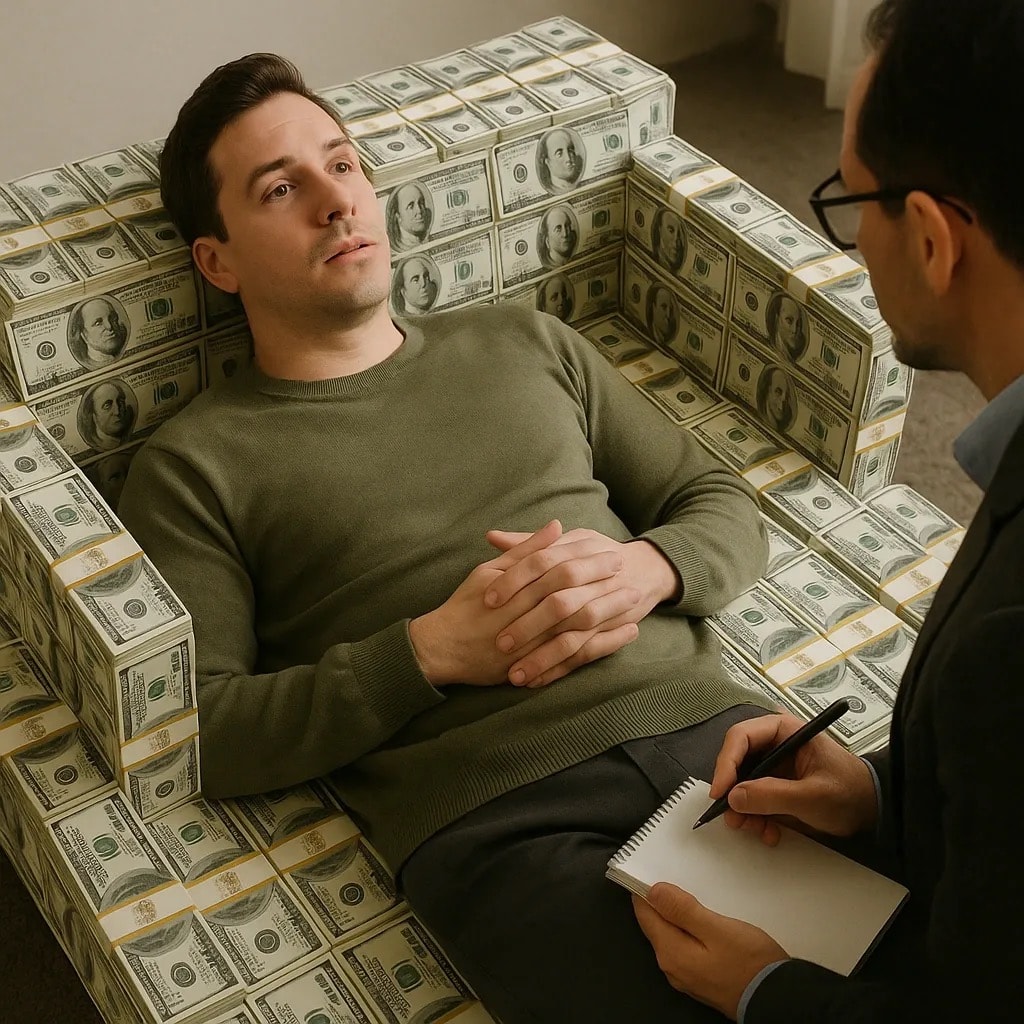
May 20, 2025
Emotional Harm Damages: What Jurors Think

May 6, 2025
Video Evidence at Trial: Don't Just Press Play
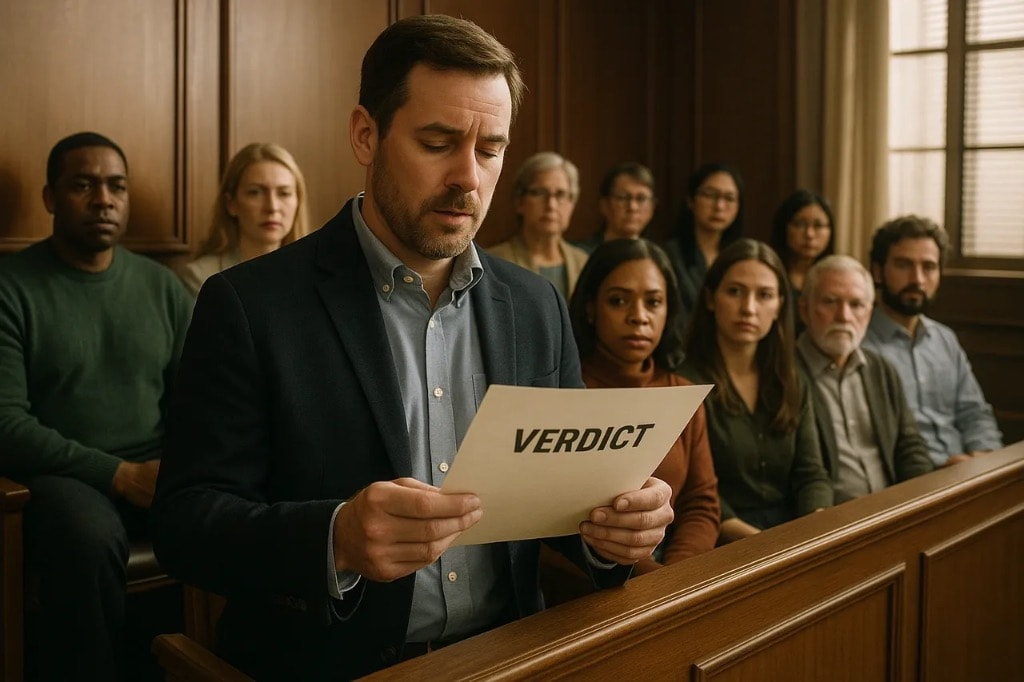
July 7, 2025
Who Is in Charge? Foreperson Selection and Influence
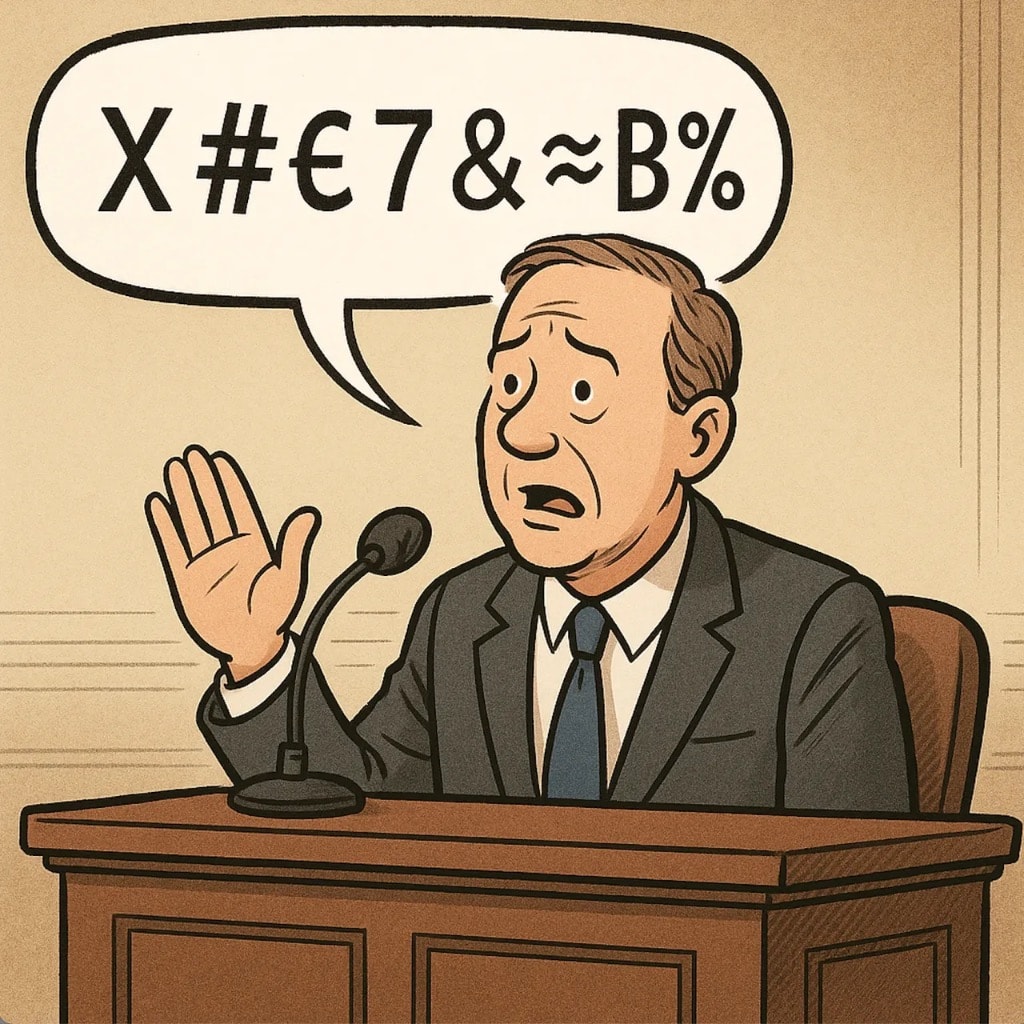
May 6, 2025
Don't Short-Circuit the Jury: Avoiding Information Overload
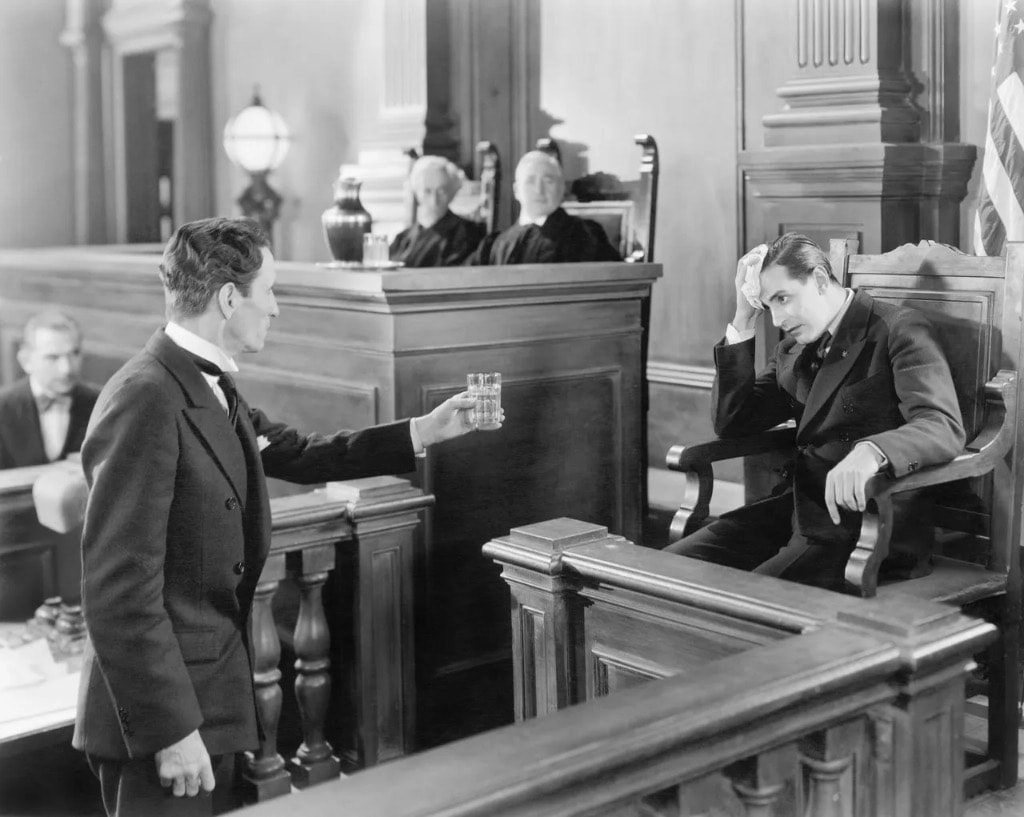
March 18, 2025
Helping Witnesses Manage Their Emotions

September 26, 2025
The Hidden Trial: Why Deposition Preparation Is Critical

August 5, 2025
Why You Should Love Your Jury
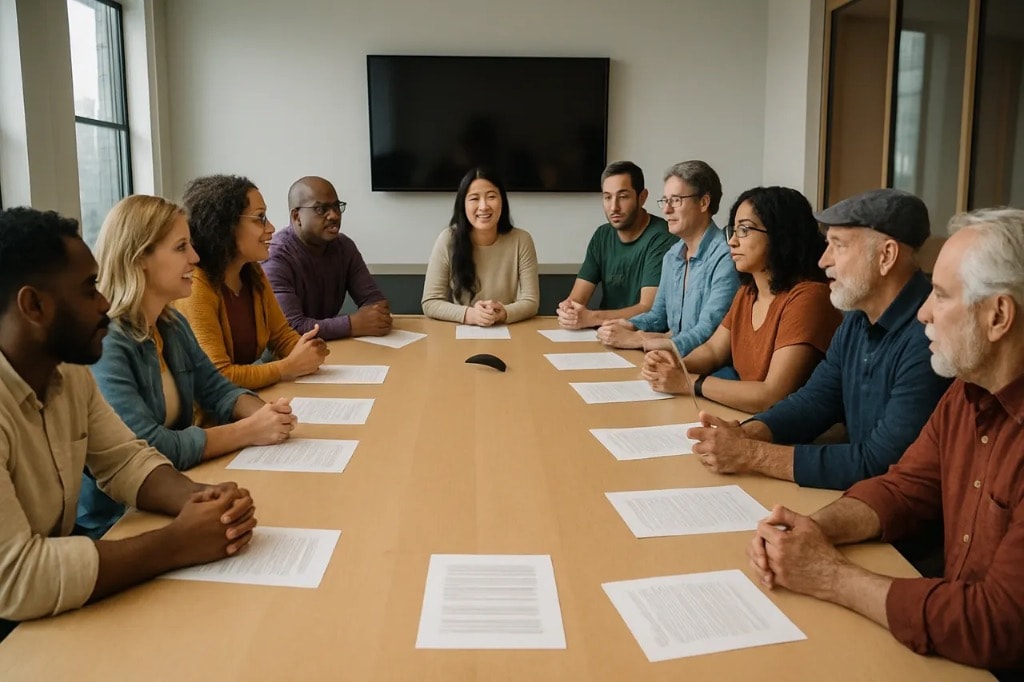
June 23, 2025
Focus Group or Mock Trial? What's Best for Your Case?
February 12, 2025
Mock Trials Are for Learning

February 12, 2022
Social Justice Movements: Today's Jury in Employment Litigation

January 8, 2024
Jurors Have Changed. Have You?
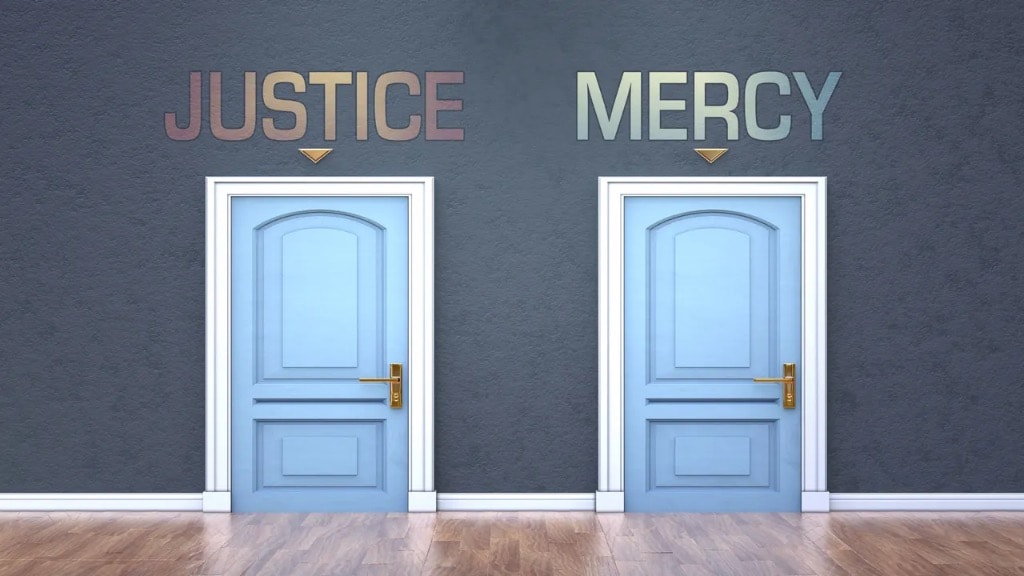
December 26, 2023
Defense and Mercy: Winning Defenses and Avoiding Nuclear Verdicts

September 6, 2023
Nuclear Verdicts: 3 Key Drivers

August 18, 2022
Victims: The Tie That Binds Against a Common "Other"
August 18, 2022
Giving Voice to Nuclear Verdicts

October 22, 2024
Tell a Compelling Story
September 8, 2021
Have Recent Events Created More Victims in the Jury Pool?
July 20, 2021
Facts, Not Attacks

September 10, 2024
Discrimination Sensibilities in Today's Jury Pool

May 6, 2021
Stealth Jurors: Voir Dire to Uncover Hidden Bias

August 13, 2024
Three Key Trial Tips

July 30, 2024
The Jury Divide

July 16, 2024
Lessons from the Chauvin Voir Dire

July 2, 2024
Juror Distrust of Civil Defendants
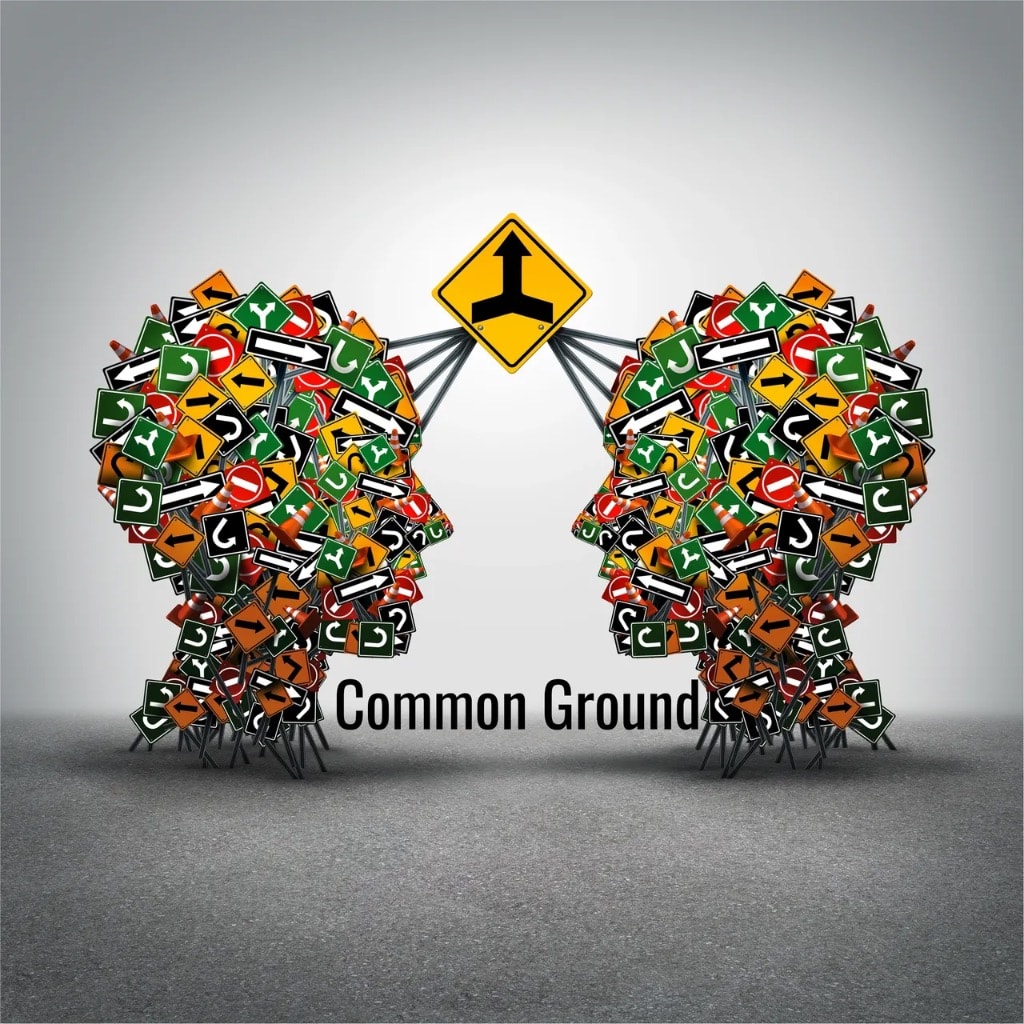
June 18, 2024
Finding Common Ground with Jurors
December 15, 2020
Trending: Systemic Racism and the Jury Box

May 7, 2024
Stick to the Game Plan

December 10, 2020
Settlements: What Happens When Juries Decide
April 15, 2021
Litigation Is Not Cancelled: Considerations of the Jury Divide

December 15, 2020